
- English
- Español
- Português
- русский
- Français
- 日本語
- Deutsch
- tiếng Việt
- Italiano
- Nederlands
- ภาษาไทย
- Polski
- 한국어
- Svenska
- magyar
- Malay
- বাংলা ভাষার
- Dansk
- Suomi
- हिन्दी
- Pilipino
- Türkçe
- Gaeilge
- العربية
- Indonesia
- Norsk
- تمل
- český
- ελληνικά
- український
- Javanese
- فارسی
- தமிழ்
- తెలుగు
- नेपाली
- Burmese
- български
- ລາວ
- Latine
- Қазақша
- Euskal
- Azərbaycan
- Slovenský jazyk
- Македонски
- Lietuvos
- Eesti Keel
- Română
- Slovenski
- मराठी
- Srpski језик

How Is Lightweight Design Changing the Demand for Industrial Polyester Webbing?
Lightweight design is changing how engineers approach load-bearing products, and Industrial Polyester Webbing is increasingly being selected when strength, flexibility, and lower material weight need to work together.
Lightweight Design Is No Longer Simply About Using Less Material
Across automotive safety equipment, fall protection, outdoor gear, lifting accessories, and restraint systems, product designers are under pressure to reduce unnecessary weight without weakening the finished product.
The change sounds simple, but reducing weight is not just a matter of making every component thinner. A lighter component still needs to withstand repeated loading, friction, bending, environmental exposure, and long-term use. This has made material selection more important.
Webbing is a good example. A strap may look like a relatively simple component, but its width, thickness, fiber structure, weaving density, and finishing process can all affect its performance. Reducing any one of these characteristics without considering the complete application can create new problems.
As a result, lightweight webbing design is increasingly focused on finding the right balance rather than pursuing the lowest possible weight.
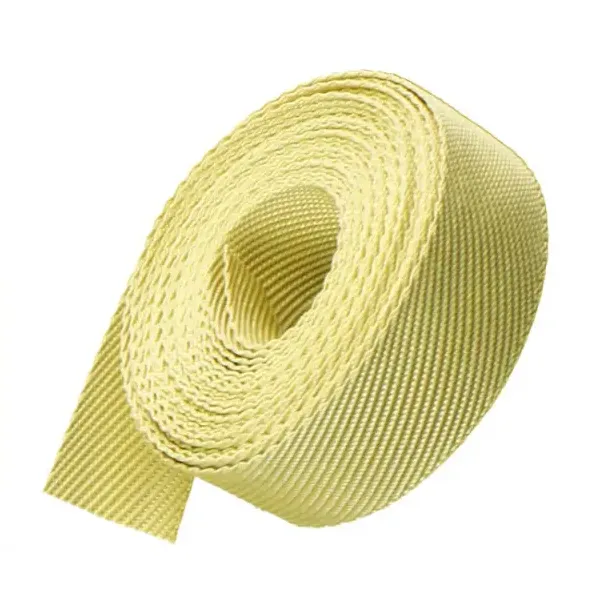
Why Polyester Webbing Fits Lightweight Product Design
Polyester has several characteristics that make it useful for applications where weight and mechanical performance must be considered together.
Its fibers provide good tensile strength while remaining relatively light compared with many traditional load-bearing materials. Polyester also has relatively low moisture absorption, good dimensional stability, and resistance to everyday abrasion.
For industrial products, these characteristics are important because the webbing often has to remain flexible while carrying or restraining a load.
A lightweight strap can also improve handling. In equipment that is frequently installed, adjusted, carried, or repositioned, reducing unnecessary material can make the entire product easier to operate.
This does not mean that thinner webbing is automatically better. The correct specification depends on the required load, safety factor, contact area, stitching method, hardware, and operating conditions.
Width Is Becoming a More Important Design Variable
When engineers reduce the weight of a webbing assembly, width is one of the first variables they examine.
A wider strap distributes pressure over a larger contact area, while a narrower strap can reduce material consumption and provide greater flexibility. Neither approach is universally better.
For example, automotive restraint systems have different requirements from pet products or industrial fall-protection equipment. A strap used around the human body may require a wider contact area for comfort, while a compact restraint assembly may prioritize space efficiency.
The trend toward lightweight design therefore does not simply create demand for narrower products. Instead, it encourages more precise matching between webbing dimensions and the actual function of the finished component.
| Design Priority | Possible Webbing Direction | Main Consideration |
|---|---|---|
| Lower product weight | Reduced width or thickness | Required load capacity must remain adequate |
| Better flexibility | Moderate width and thinner construction | Bending and handling characteristics |
| Greater contact comfort | Wider webbing | Pressure distribution |
| Compact assembly | Narrower webbing | Available installation space |
| Repeated abrasion | Suitable thickness and dense construction | Surface durability |
| Outdoor exposure | Polyester construction with appropriate finishing | Moisture and environmental conditions |
Automotive Applications Are Reinforcing the Trend
Automotive design provides one of the clearest examples of why lightweight materials matter.
Every individual component contributes to vehicle weight. Although a single webbing strap represents only a small portion of total vehicle mass, large-scale production makes material efficiency significant.
Seat belt systems also cannot be evaluated only by weight. They need to maintain consistent performance under sudden loading and repeated everyday use. This creates a narrow design window: the webbing needs to be sufficiently strong while avoiding unnecessary material.
The same principle applies to other restraint and positioning systems. Designers are increasingly looking at the complete assembly, including webbing, stitching, buckles, anchors, and surrounding structures, rather than optimizing the strap independently.
This approach is changing the role of Industrial Polyester Webbing from a basic textile component into a more carefully specified part of the overall mechanical system.
Safety Equipment Needs Lightweight Strength
Fall-protection equipment presents another important example.
Workers may need to wear harnesses and carry connecting equipment for many hours. Excessive weight can affect comfort and mobility, particularly when the equipment is used at height or during physically demanding work.
At the same time, reducing weight cannot come at the expense of the required mechanical performance.
This is why webbing used in harnesses and safety lanyards is often designed around a combination of tensile strength, abrasion resistance, flexibility, width, thickness, and stitching performance.
The practical question is not simply, “How light can the strap become?”
A better question is, “How much material is actually required for this application?”
That change in thinking is one of the main effects of lightweight design on industrial webbing.
Outdoor Equipment Is Also Moving Toward Lower Weight
Outdoor equipment has a similar requirement, but with a stronger emphasis on portability.
Camping equipment, climbing accessories, backpacks, restraints, protective products, and recreational gear may all use webbing. People carrying equipment over long distances notice small differences in weight that might be insignificant in stationary industrial applications.
For this reason, outdoor product development increasingly considers webbing weight alongside strength and durability.
A lightweight strap can contribute to a lighter finished product without requiring a complete change in product architecture. However, the material still needs to cope with repeated folding, pulling, friction, dirt, moisture, and changing weather conditions.
This makes polyester attractive for designs where portability and everyday durability need to coexist.
Lightweight Does Not Mean Universally Thinner
One common misunderstanding is that lightweight design always means reducing webbing thickness.
In practice, several approaches are possible.
Designers may adjust the width, modify the weaving structure, change the yarn specification, optimize the finishing process, or redesign the surrounding components. Sometimes the best solution is to keep the webbing relatively robust and reduce weight elsewhere in the assembly.
This distinction is important because webbing performance depends on the interaction of multiple characteristics.
A very thin strap may save material but provide insufficient resistance to abrasion. A very wide strap may distribute force well but occupy too much installation space. A thick strap may feel durable but add unnecessary weight to portable equipment.
The current trend is therefore moving toward application-specific webbing specifications, rather than one standard construction being used across multiple industries.
Production Consistency Becomes More Important
Lightweight designs leave less room for uncontrolled variation.
When a product uses a substantial amount of material, small dimensional differences may have a limited effect on the finished assembly. With a more optimized lightweight design, changes in width, thickness, weaving density, or finishing can have a greater influence on performance.
This makes process control increasingly relevant.
Modern webbing production can involve weaving, high-temperature dyeing, ironing, cutting, and coiling. Each stage can influence the physical characteristics of the finished strap.
For industrial applications, consistency between production batches is particularly important when webbing is integrated into standardized products produced in large quantities.
What This Means for Future Webbing Development
The lightweight trend is unlikely to disappear because it is connected to several broader product-development priorities: lower vehicle weight, easier handling, portable outdoor equipment, improved wearer comfort, and more efficient material use.
However, future development will not simply be a race toward thinner straps.
The more important direction is optimization. Webbing needs to provide the required mechanical performance while using an appropriate amount of material for its intended function.
This may lead to greater use of customized widths, thicknesses, colors, weaving structures, and finishing treatments. Different applications will continue to require different specifications rather than a universal lightweight standard.
For engineers and product-development teams, the practical lesson is straightforward: start with the load and operating conditions, then determine the webbing construction. Weight reduction should follow the functional requirement, not replace it.
As lightweight product design continues to influence automotive, safety, outdoor, and restraint equipment, Industrial Polyester Webbing will increasingly be evaluated according to how efficiently its strength, weight, flexibility, and durability are balanced. The most useful development is not the lightest strap available, but the construction that provides the required performance without unnecessary material.